Saturday, May 19, 2012

Highlands in Spring? - Part One


This is a summary of a week based in Strathspey with a group of A Rocha supporters. We met in Kincraig at 4.00pm on the Sunday reconnecting with old friends and meeting new ones. Even on this the first evening, I had arranged a visit to the local badger hide where we met our guide. He did allow me to take folks on the next two nights. Despite the strong breeze and monsoon-like downpour we did see three badgers and a pine marten. Those who could not make that trip had been to view the osprey on Loch Insh and had seen three otters

Monday May 14. Some folk took an early stroll to the Loch to view the osprey again and managed to see goldeneye and common sandpiper. Our walk after breakfast was in the area of Uath Lochans
Scores of siskins, accompanied by willow warblers, coal tits and chaffinches welcomed us to the woods, while at our feet wood sorrel, wood anemone and common dog violet reminded us that spring comes a little later here, than where most of us live. Walking the white trail took the rest of the morning and just at the end of lunch one of our party came rushing over to point out crested tit. Changing from the white to red trail enabled us to gain some height. This gave us a panoramic view of the area in which we were staying. We did take extra care with our feet since we had already seen a dore beetle and a lovely frog
The final stretch took in the smaller lochans where a pair of goldeneyes were swimming together. We had heard the call of a raptor but were unable to see it. What we did see was a gorgeous beetle. We found out later that it was a green tiger beetle

 The evening was taken up again with badger viewing and searching for bats. Other night sounds that were heard were some snipe drumming and a woodcock roding round his territory
Tuesday May 15 A windy day to start as we set off to search for eagles up the Findhorn valley. There were already some birders there as we arrived, one of whom was Alan Davies of "The Biggest Twitch" fame. He had already seen two sorts of eagle, but that was not to be for us. We did see Feral goats and red deer as well as common sandpiper and the ubiquitous oystercatcher. Loch Ruthven was not too far away so that was the next stage of our journey for today. Some of our party saw a tufted duck on a nearby pool as well as sand martin. At the Loch itself a semi-blizzard caused us to have lunch in the warmth of our vehicles. It did clear and we saw those lovely jewels that are Slavonian grebes
Our final destination of the day was Chanonry Point. The weather had changed for the better as we arrived. We had planned for a rising tide and our planning worked. We had fantastic views of dolphins very close to the beach. As we were leaving some dunlins, turnstones and ringed plovers scurried on the edge of the shore and a red kite glided over our heads

Our final visit to the badgers was made more thrilling as we heard another drumming snipe and a barking fox

Total now at 430
  

Thursday, May 10, 2012

Dawn Chorus

Sunday May 6 was International Dawn Chorus day. This year I lead a walk for Cuerden Valley Park Trust. We started at 0500 with about 16 folk. Robins, a song thrush and two crows commenced the concert and as we walked past Cuerden Hall, a Jay screeched its alarm and a blue tit scolded us for being too close.

 One of the advantages of starting early is birds start singing at different times. This makes it easier to note one call before some of the others start to sing. As we progressed towards Cock Cabin Wood we heard chiffchaffs, gold finches and long-tailed tits contributing their voices to the choir. A comparison between a blackbird song and that of a song thrush became possible. Chaffinch, great tit and coal tit song were added to the repertoire, as well as the call of a woodpigeon  We decided to make a small detour to breathe in the bouquet of the bluebells. They were absolutely beautiful.
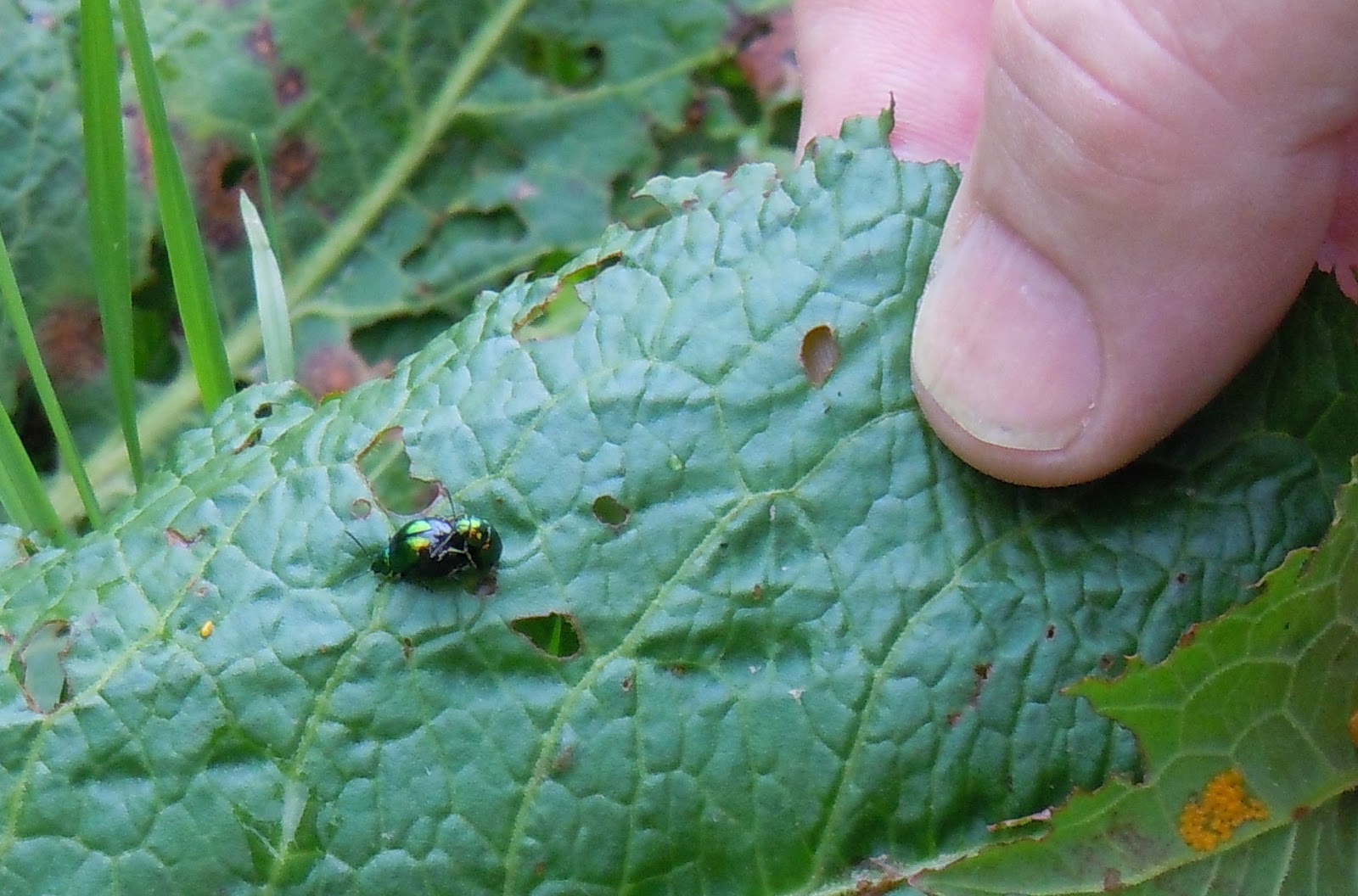
On our way down to the bottom of the valley we heard the gentle sound of goldcrest, another chiffchaff and saw a grey heron lazily flying away. By the time we arrived at the lake the sun was getting higher and it enabled us to see the great crested grebe on her nest. I was just as thrilled to see a female orange tip butterfly on a cuckoo flower. We did wonder if it  was egg laying. We had passed lots of cuckoo flower as well as bluebells and two of the stitchworts. There were also the bright yellow eggs of green dock leaf beetle gastrophysia viridula, on a dock leaf and not too far from here we saw a male and female together. The difference in size is amazing at this time of the season. He is quite small, she looks enormous in comparison.
 Continuing upstream we noticed a few swallows harvesting midges over our heads and suddenly one of our party pointed excitedly to a willow tree overhanging the river. As we looked where she was pointing, we had a fantastic view of a smallish bird with a vivid blue back and an orange tummy - a kingfisher. It flew off but we saw it again two minutes later being followed by a second kingfisher. In the woodland, a newly excavated hole suggested a great spotted woodpecker was rearing young, but we neither saw or heard anything. Well actually we did, but it was a nuthatch on another tree. Not to be outdone, the recently arrived whitethroat decided to announce its presence as we approached the Barn. One of the local dog walkers came over and said those inevitable words " You've just missed a ...." On this occasion "a" was a roe deer. It was then time for a hot drink, toast with scrambled egg or bacon. A great start to a Sunday morning.                                                   The photo is by @saveourbogs.


Please do not forget the two causes which will benefit from my challenge >>

Friday, May 4, 2012

Taste of Scargill


Scargill House is the base for a Christian movement set in the spectacular landscape of the Yorkshire Dales. Here the international community, representing many Christian traditions is committed to a common rule of life and service. They provide a Christian holiday, conference and retreat centre, inviting Christians from all traditions ( and people who are not Christian) to come and spend time alongside our resident community. Their emphasis is on prayer and hospitality as well as refreshing and equipping churches and individuals. Some times there are quiet times, but they also have lots of laughter, fun, creativity and really good food.
I spent a few days there leading a group as we explored what the Bible says about creation care as well as going out and enjoying God's creation in that lovely part of Yorkshire 
Tuesday. We discovered what the Bible says about " Why Care for Creation?" and then had a walk round the estate lead by Hugh Firman. We looked at how the management was changing in order to preserve some of the meadows and noticed field woodrush, blue moorgrass, water avens and bloody cranesbill. There are three levels on the estate and as we passed the "scar" that identifies the "gill" we saw a plant that puzzled us for a while. A referral to both "Stace" and "Rose" suggested it was Alpine pennycress.


Wednesday. we had an early start to take advantage of the fine morning. I filled the bird feeders which had attracted great spotted woodpeckers and nuthatches and then we set off round the estate. Willow warbler and song thrush were singing at the top of their voices and in competition we had chaffinches and at least one siskin. We walked carefully through the plantation and as we moved a fallen tree-guard a common shrew quickly ran for fresh cover. We advanced up the hill and heard a bird song we initially did not recognise. A scan of the treetops revealed it to be a common redstart. In the evening we did try to find out if there were any bats emerging. Wet conditions and low temperatures made it a fruitless wait, but there is always another time.
Thursday. We explored the various aspects of food; the cost in mileage, and how that affects our carbon footprint; how much is " synthetic" and produced to lowest cost rather that nutritious; then how we could grow our own. We the decide to look for those important workers without who we would not have any food - bugs. Examining different habitats, old branches, piles of leaves, and stone heaps, we discovered a variety of life. Millipedes, centipedes, woodlice, earthworms and a magnificent glow worm larva. We were fortunate to have a visit from Judith Allinson who does a lot of work for Christian Ecology Link. She was my tutor on two of the plant identification courses I attended at Malham Tarn FSC Centre. She pointed out two special things that were new to me. These were bird perch lichen and Craven Door Snail. The picture below is the Glow worm larva.


Meeting new friends and sharing in creation care made the week very worthwhile


Sunday, April 29, 2012

Lots of Gulls - No little Grebe

I recently took part in the Chorley Bird Race. The main reason is to get a snapshot of the birds in Chorley Borough. We start at mid-day one day and finish mid-day the next. We started in the east and soon had swallow, sand martin, and buzzard. Whithnell scrapes was very quiet, but there was a teal, a grey heron and tree sparrows. An unexpected bonus came in the gift of some jelly babies offered by some walkers going in the opposite direction. A visit to a local quarry enabled us to see peregrine and raven.
Cuerden provided us with dipper and bullfinch, but the little grebe was not to be seen. At White Coppice, a common redstart serenaded us but observing him proved impossible. As the afternoon and evening progressed the temperature fell as did the amount of birdsong. The lack of some commoner birds seen or heard was a little frustrating. We were encouraged by the sight of a single little gull, whose very close flypast allowed us to see its diagnostic underwing. We still had not seen dunnock, grey wagtail or house sparrow but as we approached Belmont village, a short eared owl flew almost right over the top of our vehicle. A search for Mediterranian gulls in the hundreds of black headed was made uncomfortable by the almost Arctic blast, but my partner at least saw a snipe. Dusk was now quite close so a quick visit to Roddlesworth woods for woodcock was our plan. Once seen and heard, we did not hang around. We could be judging some folk, but there were several "suspicious" characters in the car park.
 The next day, a wet start had cleared by 0530, which enabled us to hear tawny owl and grasshopper warbler. Not five minutes later we heard a yellowhammer sing " little bit of bread and no cheese" and saw a grey partridge flying away from us. 
  

Our next stop was where the River Yarrow meets the River Douglas. We listened and scanned the hedgerows and saw corn buntings as well as a single red legged partridge. The distinctive call of a redshank by the rivers alerted us to not only that bird, but also shelduck and two common sandpipers. Just outside Croston is a reed bed where a sedge warbler and a lone house martin added to our growing total. Not too far away a few wheaters gave a good impression of being lapwings. Not too good as to confuse us however. A trip to Birkacre was quite productive having seen kingfisher and mute swan, but still no tree-creeper. Mid-day was approaching far too quickly and we still needed a few more birds. We only saw one more species however, but it was a good one, actually two. A pair of ring ouzels among the rocks at Black Coppice proved to be our final addition. 82 birds for the day. Not good enough to beat the 87 discovered by one of the other teams.


 The addition of some stitchworts and an orange tip butterfly brought my challenge list to 351

Wednesday, April 18, 2012

welcome warblers and day at the dunes

Thursday 12 April was a quick visit to Anglezark. I was so glad I did. The area was alive with willow warblers and I also heard one garden warbler. Summer is definitely here (except for the weather) The picture is of a garden warbler from last year. A drab bird with a gorgeous song


Saturday 14 April. I had to cancel a trip to Crosby due to family commitments. Instead I went to meet St Anne. or rather Annie, Dunes officer for Lancashire Wildlife Trust, in St Annes. She had organised a search for lizards in the dunes.The sun was shining, if somewhat feebly, on some of the banks. These were said to be ideal places to see our quarry. Since it was still a little cold, we decided to take a walk in the dunes. I managed to see Marram grass, lyme grass, sea radish, common whelk shell, Isle of Man cabbage, meadow pipits, common mouse ear and dewberry, The other leader had gone on a lower path and as we met he pointed to a place where he had seen a common lizard. I stayed there for about ten minutes and managed to see a single juvenile. On our return to the car park we passed some creeping willow and early forget-me-not. We had another futile search on the bank, but since the sun was behind clouds and the temperature had dropped we decided to call it a day ( or morning)
The afternoon was spent practicing using flower keys on Cuerden Valley Park. Thanks to this I identified a wavy bitter-cress and found that the lords and ladies near the BHS pond was RARE lords and ladies arum italicum.


Challenge total now 320

Tuesday, April 10, 2012

300

On Saturday April 7 I was on Reserve Guide duty at Lancashire Wildlife Trust's Brockholes reserve. I walked round anticlockwise on a sunny if slightly cool day. Each time I visit Brockholes the skylarks give me a musical reception and today they did not disappoint. As I strolled on the path through the coltsfoot, two oystercatchers and three greylag geese flew over. I went towards the River Ribble where a group of committed birders were on the lookout for ospreys passing on their way to Scotland. Whilst I was there there were some sand martins performing aerobatics and chattering as they did. Boilton Wood is at its best at this time of year with all the spring flowers bursting out. My favourite is the bluebell, as you can see
At the entrance to the wood was a plethora of colour. The deep blue of hyacinthoides contrasting with the yellows of lesser celandine, coltsfoot, daffodil and golden saxifrage. More variety with both wood sorrel and wood anemone splashing their white blooms, the green of dog mercury and today a new colour - red campion. Flowers are not the only pleasure. A bumble bee bombus pascuorum and a fly, which looked like   polietes, buzzed amongst the blooms. A little further I saw a large white patch moving through the trees. It was the unmistakable rump of a roe deer. I was quite surprised, since it was five minutes to mid-day. Most times I see these delightful creatures is nearer to dawn or dusk. Once clear of the wood, my walk took me past some tufted ducks and great crested grebes. On to Number one pit where canada geese, mute swans, and more tufted ducks mixed with the ever aggressive coots. On the island several lapwings had already staked out their territories and were defending them with enthusiasm.I did see a few redshanks being very active. Continuing on to the Ribble Way I saw a wonderful bank of moschatel, also known as Town Hall Clock 
  .
The final leg of the journey meant I could take advantage of the hide along this stretch. A jay screeched its displeasure, but I was more interested in the three little ringed plovers not too far away on the island. I glanced towards where the sand martins had nested last year and was thrilled to see a common sandpiper. The reason for this was,not just that the plovers and sandpiper were new for the year, but it means my total is now 300

Saturday, April 7, 2012

What kind of fool

Saturday and Sunday March31/April1. I went to Waddow Hall in Clitheroe for a weekend training in conjunction with RSPB Wildlife Explorers. I took a new junior leader who wants to get involved with my Wildlife Explorer/Watch group. Most of the time was indoors, but we did get chance to be involved in a variety of activities outdoors. On the river we saw goosander, and dipper, whilst in the woods, blackcap, chiffchaff, song thrush and a drumming great spotted woodpecker reminded us that, despite an early morning frost - spring is here. I did not stay the night and as I set off the Sunday morning, the first thing that said good morning was some wild garlic under the oak tree just outside my house. this was after scraping ice off my windscreen.


 April had fooled us into thinking the cold weather had gone. Then in the woodland at Waddow, a common dog violet tried unsuccessfully to stay hidden. I was glad to spot white dead nettle, cuckoo pint and a bee bombus pascuorum.
Monday 2 April Fooled again by the weather. Spring returned to winter, my daughter driving to work in snow.
Tuesday April 3, I had to get involved in shopping again. It's a pity that normal life interferes with my challenge.A quick visit to Withnell Fold meant I spotted common dog violet, chiffchaff, jackdaw, great spotted woodpecker, and a lichen I have yet to identify.
Wednesday April 4 I had childminding duties to perform in bitter conditions. I had decided to take Aiden to Brockholes to have a try on the playground. He was thrilled. I was less so having seen the snow on Pendle Hill. I did take a quick look in Boilton wood and found wood stitchwort a, good mix of early flowers and more cuckoo pint,
Thursday April 5th We went from Arctic weather back to Bahamas weather. I went to the scramble track to look for otter footprints. Our companion found some prints whose identity have still to be confirmed. On our return journey seeing great horsetail, hartstongue, small tortoiseshell, lots nuthatch, 6 chiffchaff,  mistle thrush, cuckoo flower and bee fly brought the grand total to 290

By evening the Arctic conditions had returned but we still went to the final rehearsal for the Preston Passion.
GOOD FRIDAY. I took part in the Preston Passion, a re-telling of the Good Friday story. A reminder that Jesus came not only to restore the broken relations between man and his Creator, but to bring the whole of creation, birds, bees, bugs, bovines, human beings and all things botanical back to glorious harmony with each other.