A small group from the A Rocha friends in the North West met at Southport to enjoy the predicted high tide. As we arrived at the car park, a pair of oystercatchers soon let us know where they were and overhead skylarks were bursting their lungs announcing that spring was really here. In contrast to that lovely sound, the cacophony of black headed gull calls threatened to drown out everything else. We called in at the Sandgrounders hide for five minutes and noticed the blackthorn bushes coming into bloom.
Walking down the footpath we headed towards Nell's Hide where at the entrance one of our party noticed Ivy-leaved toadflax just coming into flower. Once in the hide we managed to see in the middle distance, pintail, wigeon, shoveler, several Canada geese, some mute swans and a couple of moorhens. Then closer to the hide several more pintail were roosting on a small island. Then, in the mainly dead vegetation we were just able to see a snipe foraging in the mud. The camouflage effect of its plumage was amazing. It was then time to check how high the tide was getting. Unfortunately the persistent east wind was preventing the tide coming as high as the tables had promised. We scanned the marsh and found scores of pink footed geese with a few greylags as well. The sea was still a long way off making identification of the thousands of waders almost impossible so we decided to set off to go to the former sand plant area. Two robins were in their seasonable aggressive state and the skylarks and meadow pipits were singing and displaying in the slightly sheltered area close to the RSPB car park. Walking carefully round this area to the river side of it enabled us to see two reed buntings and a lone blackbird. Another member of our party stopped and asked us to use our telescopes to look at a branch sticking out of the mud some distance away. A merlin was using this as a vantage point so we stopped for a time to enjoy this small raptor. As we did its larger cousin, a peregrine, swiftly flew past.Beyond the merlin we could see the waders but with the exception of some curlews, still too far for reliable identification. We were also looking for short eared owls but this time success eluded us
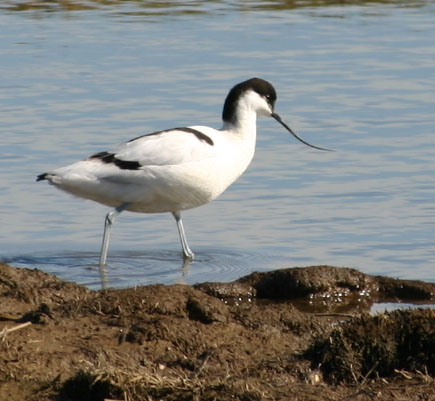
. Back to Sandgrounders hide where another birder said he had seen a spoonbill. We noticed about 20 avocets, more wigeon, shovelers, black-tailed godwits, and coots. A large white bird in the distance tried to fool us for a while, but its black pointed bill and yellow feet confirmed it as a little egret rather than a spoonbill. It was nearly time for some of our party to head for home and one of them mentioned he had never seen a water rail. Mere Sands Wood was on their way home so I guided them to that Lancs Wildlife Trust reserve. On our way to reception a few tree sparrows were busy at the feeders along with chaffinches dunnocks and more robins. We made our way quickly into Lancaster Hide and within two minutes the water rail put in its appearance along with its entourage of more reed buntings and dunnocks. All the party left for home after a very enjoyable morning.
Saturday, March 30, 2013
Monday, December 10, 2012
The Final Countdown
I may have remarked at the start of this year that my Challenge would be species that I saw on normal trips out, or holidays and would not include any twitching more than 4 miles. It has been hard as I could see the the year end approach and the 1,000 species becoming more unattainable. Both charities I support are committed to action for reducing carbon footprint so I could not in all conscience dash around the country using up fossil fuel. There have been very few additions to my list in November and December but I have been out a number of times.
At the end of October, on a crisp frosty day, I visited Leighton Moss RSPB reserve with Chorley Natural History Society. I think I saw more friends I had not seen for a while than wildlife. I had taken a new aquaintance from A Rocha UK to see the 'Moss and after I had said hello to colleagues from there, RSPB Southport, A Rocha, Lancashire Environment Fund, Brockholes, Cuerden Valley Park, Dee Estuary Volunteers and other Lancashire Wildlife Trust volunteers, her reaction was " You really do seem to know everybody in Lancashire!"
On our trip round we did get good views of marsh tit from the feeding station near the visitors centre, a quick view of bearded tit down the causeway and the usual very friendly robin near the public hide.
At the end of October, on a crisp frosty day, I visited Leighton Moss RSPB reserve with Chorley Natural History Society. I think I saw more friends I had not seen for a while than wildlife. I had taken a new aquaintance from A Rocha UK to see the 'Moss and after I had said hello to colleagues from there, RSPB Southport, A Rocha, Lancashire Environment Fund, Brockholes, Cuerden Valley Park, Dee Estuary Volunteers and other Lancashire Wildlife Trust volunteers, her reaction was " You really do seem to know everybody in Lancashire!"
On our trip round we did get good views of marsh tit from the feeding station near the visitors centre, a quick view of bearded tit down the causeway and the usual very friendly robin near the public hide.
As November passed I was able to see waxwings in Preston and some wonderful views of willow tits feeding in the garden of a friend's cottage in Glaisdale ( North Yorkshire)
We also saw a wonderful blast from the past as the Sir Nigel Gresley steamed past us on the start of one of our walks
I attended a training day with Lancashire Badger Group and as we were searching for signs of badger we found a moth demonstrating its use of camouflage. It is a Scarce Umber, and brought my total to 924
This will be my final posting for 2012. Thanks to all those who have donated to both my charities. You will find details of A Rocha here > http://www.arocha.org/gb-en/index.html
and Lancashire Wildlife Trust here http://www.lancswt.org.uk/
Sunday, October 28, 2012
October - 900+ and getting close
Tuesday 9th October I paid a visit to Brockholes on a lovely sunny day. Several common darters were skimming over most of the water bodies both in tandem and ovipositing, and a pair of buzzards were high over Boilton Wood. Near to the Wood I observed some shaggy inkcaps and candle snuff fungus.
Thursday 10th, I had to visit Chorley to buy a new watch strap and as I was passing St Georges Church the peregrine was easily visible even without binoculars. The picture was taken by Ivan Lynas. I then visited Lancashire Wildlife Trust's Mere Sands Wood and saw lots of species of fungus with more fascinating names. There is Leafy brain, witches butter, fragrant lepiota, plums and custard, and dead man's fingers. These were a boost to my list
I have also been searching for knopper galls which I usually find when I see acorns. This year I don't think I have seen more than three acorns and only one horse chestnut. Probably too little sun has meant not enough pollenators. This gall is from last year, though I have seen just one this year
The last week in October I helped with river studies on Cuerden with Penwortham Girls High school where we found Minnow, Bullhead, mayfly nymph and even a lesser waterboatman. What was noticable was on Friday with the temperature down by 8 degrees C, much fewer samples were caught. We did see 6 roe deer and 3 buzzards though
Tuesday, October 2, 2012
Feast to Famine
I became very busy in August with several trips away from home.
August 4 to 11. I was helping Andy Lester, Conservation Director for A Rocha UK with a week at Lee Abbey in north Devon looking at Creation Care through the Psalms. We had walks, pond dipping. talks, rock pooling, a boat trip,beach art, bat walks and innovative styles of worship. For two of the evenings we set up a moth trap and had some reasonable catches. The two most popular were Setacious Hebrew Character, because of its name and Poplar Hawkmoth, because of its size.
New additions to my list are getting scarce as you can see. I could only add the two above in the first three weeks of September. I intend to keep searching up to the end of December since I still have not had waxwings or Michaelmas Daisy ..... yet.
Total at the end of September is 870
Here also two pictures from our visit to the beach. There is the shell of a masked crab and some beach art. I still have no idea how they managed to balance all those stones. On the boat trip we were able to have good views of some porpoise
The following weekend, August 17 to 19 I went to the Bird Fair at Rutland Water. Two days I helped on the A Rocha stand and on the Sunday I worked for the RSPB. On a couple of the evenings we went to a hide on the edge of Rutland Water. There were scores of gulls, a few terns, a green sandpiper and we saw the ospreys flying low, dragging their feet in the water. We understand they were washing fish scales off their talons. The rarest thing to fly over was a Vulcan bomber, though I was more excited at meeting both Richard Lewington, the illustrator of butterfly and moth books and Clive Stace, the author of the flora.

Early September I visited Northamptonshire as part of the A Rocha UK "Time Out" weekend. It is a time when we plan, pray, learn and chill together as a team. We did get the chance to check round some local lakes. This enabled Norman Crowson to photograph some Banded Demoiselles, a Golden Y moth and this Sacred Ibis. There were also several migrant Hawker dragonflies, a hobby and quite a few swallows on migration
Total at the end of September is 870
Monday, September 24, 2012
To Infinity and Beyond
Yes thanks to my great grandsons I am a fan of "Toy Story" as well as a fan of creation. This was a post I had written a month ago but omitted to publish. My goal is now 1,000 and I started by spotting some marsh willowherb and this bog bush cricket. On July 4th I was invited to visit Winmarleigh Moss, a new reserve acquired by the Lancashire Wildlife Trust. It needs a bit of work to restore it back to prime condition but it is still vital site for carbon capture and storage. Since there were quite a few of the Wildlife Trust staff here as well, I had lots of folk who were able to confirm some of the new species I encountered.
Large Heath butterfly, four jawed spider, common heath moth and peppered moth were some good additions towards my new target. I saw some sundew but none containing any prey.
As we neared the end of our survey someone detected a wood tiger moth almost hidden in the undergrowth. It had been a marvelous day which ended with a visit to a farm selling locally made ice cream
The rest of the month was very busy with education visits, pond dipping sessions and guided walks at both Cuerden Valley Park and the Wildlife Trust's Brockholes reserve. This meant less time searching for species but I was still able to add weld, purple loose-strife and brown hawker dragonfly to my score.
Wednesday, June 27, 2012
The final ? few
After my return from Bardsey I took things easy for a while. On my trips round Cuerden Valley Park I could only add Marsh and Hedge woundwort. I was supposed to be leading a walk along the River Lostock on Saturday June 16 to find Banded Demoiselle for the British Dragonfly Society local group. A very wet day as well as low temperatures meant no-one turned up for this. A pity since the Cuerden Beer Festival was in full swing and they could have drowned their sorrows. The following day was much brighter and I saw several common blue and azure damselflies in tandem.
Tuesday June 19 saw me joining the Lancashire Endangered Plants group on a search for geranium sylvaticum.
This was in the Barnoldswick area of Lancashire along a disused railway track. We saw several groups of this flower as well as a hybrid water/wood avens. We passed the end of the Fouldridge canal tunnel on this trip as well.
On our return walk we also had a twayblade and a little later Fox-and-Cubs
Tuesday June 19 saw me joining the Lancashire Endangered Plants group on a search for geranium sylvaticum.
This was in the Barnoldswick area of Lancashire along a disused railway track. We saw several groups of this flower as well as a hybrid water/wood avens. We passed the end of the Fouldridge canal tunnel on this trip as well.
On our return walk we also had a twayblade and a little later Fox-and-Cubs
Severe rain limited my trips for a few days. They had caused severe flooding and some considerable damage. You can see some here in photos taken by some friends of mine.The first is the bank of the River Lostock, the second the River Ribble very full.
This was a little frustrating since I was now up to 690, and wondering if I should extend my target.
Plants again came to my rescue since throughout the following week I saw amongst others; nipplewort, meadowsweet, selfheal and hoary plantain. For a whole two days I was on 699 with my brother telling me there was brown hawker at Gait Barrows and another friend saying she had seen alkanet in South Wales, frustration continued.. On Wednesday June 27 I came out of the Cuerden Valley Park office and saw a flower I did not recognise, just in bloom. With the help of John Lamb and "Blamey, Fitter and Fitter" Wildflowers of Britain and Ireland, I identified it as Green Figwort -
HOORAY - 700.
Picture by Alan Wright, Lancashire Wildlife Trust
But it's not even the end of June yet, and though a few folk have sent gifts to the Just Giving site here on the right >>
or at least a bit higher up on the right, I will carry on and try to reach ONE THOUSAND if some more would support either of the two charities
Thursday, June 14, 2012
Long to Rain Over Us
June 2 to 9 ( or 10) My week on Bardsey with Steve Hughes and his family started with a beautiful day. on Saturday June 2. There had been a good sighting from the beach at Aberdaron of Risso's dolphin. Could this be a foretaste of things to come. We had a calm crossing with Colin on his boat enabling us to see several manx shearwaters, razorbills, guillemots and one kittiwake. I dipped on the kittiwake.
It was good to be back on the island again and to be staying in the Observatory. By the time we had unpacked our bags and settled into our accommodation it was time for lunch. There were several other folk staying in the Bardsey Trust houses including a party of twenty seven singers. I took a walk round enjoying the sound of the choughs as they wheeled and danced in the sky. As I may have said before that they seem do it just out of sheer pleasure. Gannets were easy to pick out with their snow white plumage and the black tips to their wings. The calm day meant that only a few were seen. I had taken an ID sheet for grasses and was able to note about 12 just in the short distance from the harbour to the school house. Connor, the son of the Observatory's warden came to show us a slow worm. It was a superb specimen. Steve, the Warden then lifted a stone in the garden to show me some ant woodlice, platyarthrus
hoffmannseggi. In a pot, in the fridge, (where else?) was a small elephant hawk moth that had been caught the previous evening. This edged my total over the 600 mark !!
The wind had been in the East with some slight rain, which had been good for these two species. We only caught one moth, a brown silverline.
Monday June 4 was a gorgeous sunny day. I did some plant surveying and then headed for a spot just south of the narrows where there is the " hole in the rock". Lunch was taken here with all of us watching the seals and listening to their plaintiff calls. Several swallows, a few house martins and some sand martins devoured the local insect population with their usual aerobatic feeding. Fortunately they did not eat a Painted Lady butterfly which was in the area. This was also the day when Bardsey would be part of the vast number of beacons lit to mark the Diamond Jubilee of Her Majesty the Queen. By 10.pm most of the folk on the island had gathered on the mountain summit and then at the appointed time the beacon was lit. we were able to see some fireworks both to the north and south of where we were and also the lights on Snowdon. It was all very impressive
That was to be our penultimate fine day.Tuesday - rain in the morning as I went to the north hide. A family of 5 stonechats were very noisy as I passed through their territory but I did have good views of the peregrine they were warning me about. On the edge of the cliff three whimbrel paused for about five minutes and a single turnstone in magnificent summer plumage caught my attention as I eventually arrived at the hide. Apart from the close views of Manx shearwaters, razorbills and guillemots, I also had my first glimpse of a puffin with its bright orange/red legs trailing behind it. In the afternoon we had fun rock pooling. The result was finding shrimps, prawns, a shore crab, a blenny and a sea slater. The sea weed was amass with sand hoppers which gave a feast to the gulls, wagtails, rock pipits and various waders gathering in Solfach.
Wednesday, Thursday and Friday all had rain at some part of the day, but we did have enough breaks to see common blue butterfly, small copper and a few small whites. Another "lifer" for me was a red breasted flycatcher near Hendy plantation. I also managed to see the very bedraggled little owl. A quick trip up the mountain ensured I photographed the Golden Haired Lichen which grows just by the path.
On the Friday I almost had a minor tragedy. Ben Porter had noticed a Greenish warbler near his home. It was a very wet search for all of us and whilst wiping rain drops from my spectacles, one of the lenses fell out. I am glad to report I found it and Kathryn Pollard managed to fit the lens back in - phew!!. I didn't look forward to driving home using only one eye. We did find the warbler in the Heligoland trap, and duly had it ringed.
When we were doing some sea watching from the North hide I spotted a seal which seemed to be bleeding from its mouth. It turned out to be skinning and eating a pollock. The following two pictures were taken by Ben Porter.
Our departure from Bardsey was delayed by a day due to the rough seas created by the strong winds from the previous few days. It did mean that we were able to enjoy a very sunny, warm and dry day on the Saturday. We had some more really good sea watching and eventually on this my last day I saw a kittiwake myself. Later I found heath spotted orchid and trailing St Johnswort.
A flat calm sea on Sunday meant no further delay and an early start meant I had time to visit the little tern colony at Gronant on the way home. I had been able to add a further 72 to my challenge list without too much effort and £20 to my Just Giving total from two of the other island visitors. The week was a holiday as well and I had a quite relaxing time
Total now 650 - Should I re-set my target higher?
Subscribe to:
Posts (Atom)